Student Binder · Source pages 6–13
1 · The Promise
What the Forge is, the single rule, your mentors
This is not a class where you sit and listen. You prepare, perform, and argue out loud. There are no passengers.
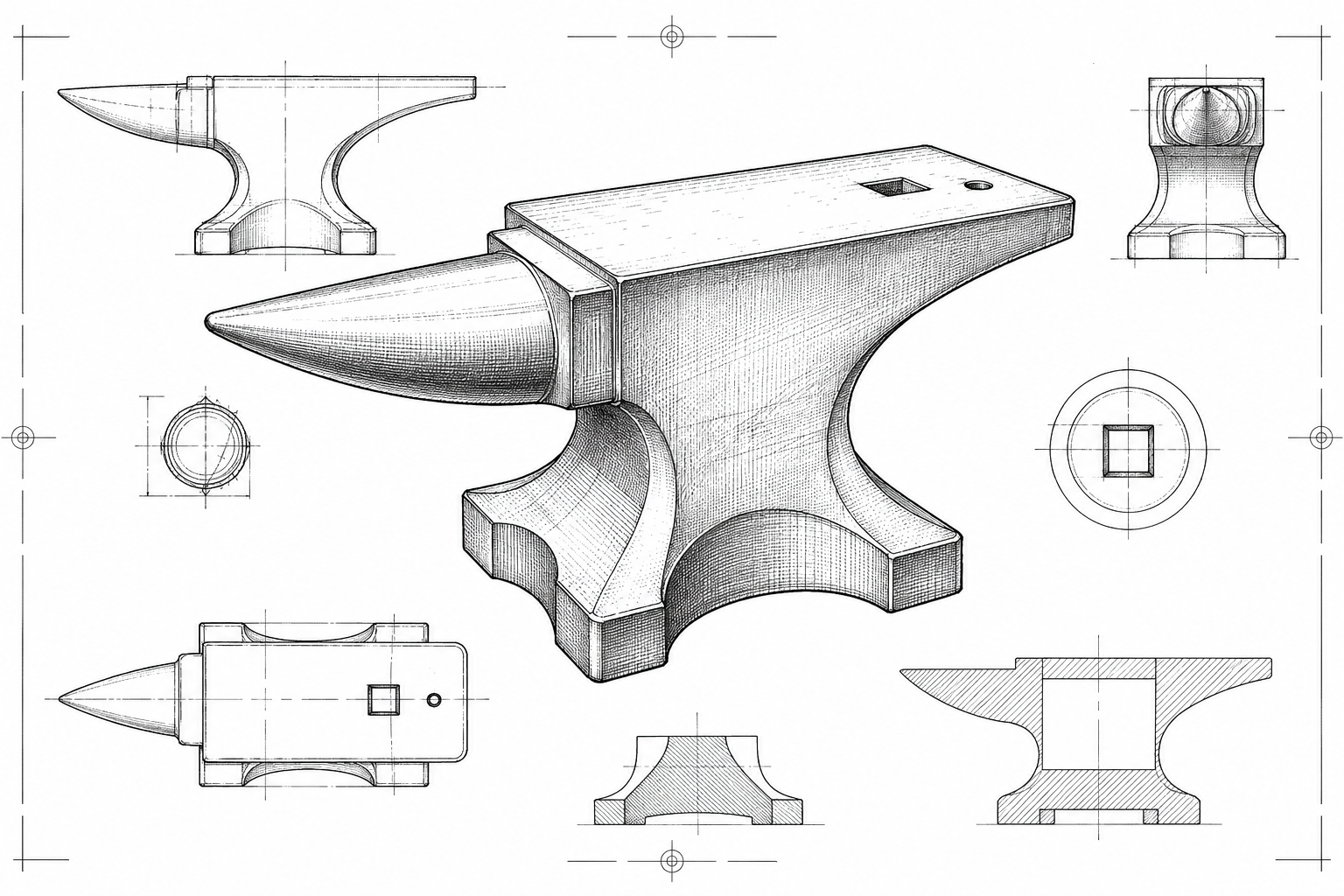
THE FORGE IN PLAIN LANGUAGE
You will read eight books this year. For each one, the class holds a debate, a structured argument about one hard question the book raises. You don’t pick your side; you’re assigned one, and you argue it using evidence from the book. A debate runs about 35 minutes by a fixed set of rules, so everyone knows exactly when to speak and for how long. Nobody is graded. The goal is plain: change minds with evidence, and notice when your own mind changes.
Every debate needs different jobs done, so each unit you are given one role. You might argue (Debater), run the debate (Moderator), gather evidence (Researcher), or judge and vote (Jury). Roles rotate. Over the year you do all of them.
After each debate you write two short pieces: one about the argument (what shifted, who proved what) and one about you (who you are becoming). At the end of the year you stand up for 8–10 minutes and make one true claim about yourself, backed by everything you argued. That final stand is called the Anvil.
That is the entire machine. The rest of this handbook gives each piece its real name. Every new term is defined the first time you meet it, and all of them are collected in The Forge Dictionary at the back. If you are ever lost, flip there first.
| It is NOT | It IS |
|---|---|
| A lecture class | A preparation-and-performance class |
| A discussion circle | A structured debate with rules, roles, and consequences |
| Safe to coast in | Demanding – show up unprepared and the debate is weaker for it |
| Graded like a normal class | Gauged by what you can defend and what you can admit |
| Optional | Required – every student has a job, every unit, every debate |
The Forge runs on three jobs. Depending on how many mentors your class has, one person may hold more than one. Your mentors fill in their names on day one.
| Function | What they own | Go to them for… |
|---|---|---|
| Forge Coach the room | Role assignment, prep-deadline confirmation, running and guarding the debate, catch-up check-ins | “I’m behind on reading.” / “What’s my role?” / “My timer broke.” |
| Text Coach the evidence | Receiving Evidence Maps, source verification, live fact-checking | “Here’s my Evidence Map.” / “Is this source credible?” |
| Weaver the record & story | The private Forge Record, the Reveal, 1:1 conferences, Story Layer feedback, the year-end Final Gift | “Here’s my Story Layer.” / “Can we talk about my arc?” |
| This year’s mentors | Name |
|---|---|
| Forge Coach | |
| Text Coach | |
| Weaver |
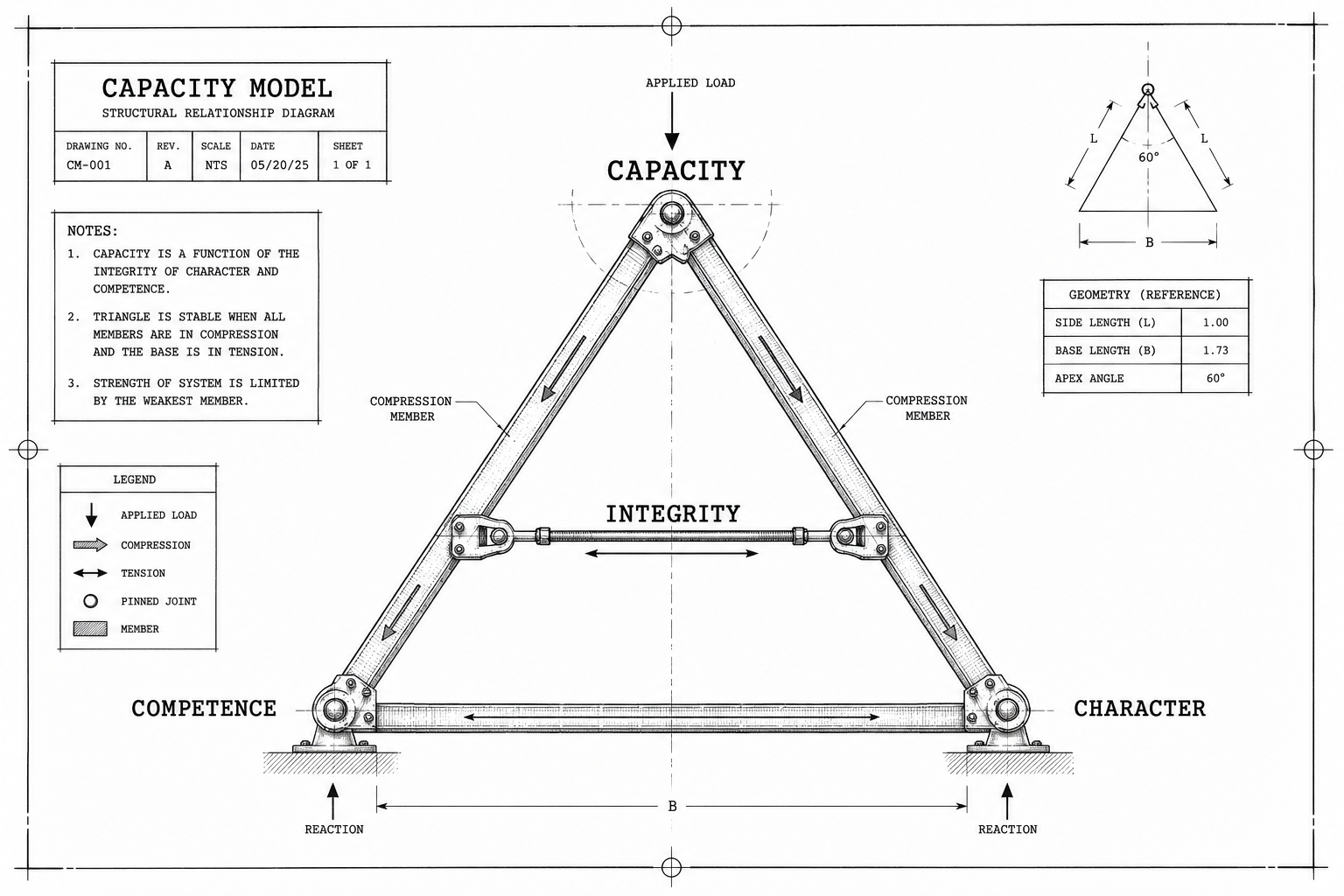
Character is what you choose. Competence is what you can do. Integrity keeps your action aligned with what you actually believe. Capacity is what remains under pressure.
The Forge does not score who you are. It gives you repeated chances to find out what holds when the room gets difficult. After each debate, ask: which part held, and which needs work?
- A debate record, every role you played, every position you argued, every vote you cast, every mind you changed (or didn’t).
- A Story Layer portfolio, eight short narrative pieces, one per unit, building an arc across the year.
- An Anvil presentation, 8–10 minutes drawing on your full record, making something true out of what you argued.
- Investigate, research before you form a position.
- Debate, argue under real stakes, in front of the room.
- Write, synthesize what you argued.
- Story, connect what you argued to who you're becoming. This feeds the Anvil.
By Unit 8, you will see how they build on each other.
Every role matters because your preparation gives the room something it cannot produce without you. That's activation.
The forge cares what you can defend when you walk out.
- Respect the room. Listen thoughtfully. Come prepared. The debate belongs to everyone in it.
- The timer is sacred. If the moderator says time is up, time is up. No finishing your sentence.
- Evidence beats opinion. A strong claim with no evidence is noise. A weak claim with strong evidence is where the debate lives.
- Changing your mind is not losing. The jury that changes its vote has done the hardest work in the room.
- Look for the good. If you can’t see the good, be the good. This applies to the text, the debate, and the person next to you.
Sign this at the Trial Forge, during the session. Take it home for a parent signature, and bring it back signed before Week 2.
- I agree to complete assigned reading before every Arms Room.
- I agree to meet the prep deadline every unit. Other students depend on it.
- I agree to show up ready to work, not ready to watch.
- I agree that the room is better because I am in it, and that if I am not ready, I will say so before the debate, not during it.
THE FORGE · PARENT BRIEF
The Forge is a literature and rhetoric class for 16–17 year olds meeting fall 2026. Students read eight significant books, debate a central ethical question from each one, and finish the year with a substantial piece of original writing built from their own debate record.
It is not a lecture class. It is not a discussion circle. Your student will be expected to prepare, perform, and reflect, every unit, every debate.
Every student has a job, every unit, every debate. If they show up ready, the room is better because they are in it.
| Mentor | What they do |
|---|---|
| Weaver Jana | Story Layer, final project, narrative arc. “What story do these 8 debates tell about who you are becoming?” |
| Forge Coach recruited | Debate mechanics, timer, procedural energy. “Is the room running or is it dying?” |
| Text Coach recruited | Evidence, research, source credibility. “Does that evidence actually say what you claim it says?” |
| Unit | Trait | Book |
|---|---|---|
| 1 | Discipline | Project Hail Mary |
| 2 | Perseverance | Little Women |
| 3 | Interdependence | The Boys in the Boat |
| 4 | Resilience | Pride and Prejudice |
| 5 | Acceptance | A Man for All Seasons |
| 6 | Courage | All the Light We Cannot See |
| 7 | Hope | The Picture of Dorian Gray |
| 8 | Moral Courage | A Good Man Is Hard to Find + Tolstoy's God Sees the Truth But Waits + Dietrich Bonhoeffer document study |
Books chosen because the characters in them pay a real price for what they believe, and because that price is worth arguing about.
- Complete assigned reading before every Arms Room (20–30 pages/night, varies by unit).
- Meet the printed prep deadline. Unit One is due Sunday, Sept. 27 at 10:00 AM through the local course channel or paper handoff; later units print their own deadline.
- Show up ready to work, not ready to watch.
| Phase | Units | What mentors do |
|---|---|---|
| Demo | U1 | Active every session. Mentors model. Students watch. |
| Handoff | U2 | Mentors sit beside students with whisper-cards. |
| Warm Fade | U3–4 | Outside the circle. Intervene only on crisis. |
| Independent | U5–6 | Mentors jury like students. Emergency only. |
| Emergency Only | U7–8 | In the corner, or absent. The room is theirs. |
By Unit 8, students run the entire debate cycle without mentor intervention. They have earned it.