Mentor Binder · Source pages 10–12
WHY
Philosophy in one page
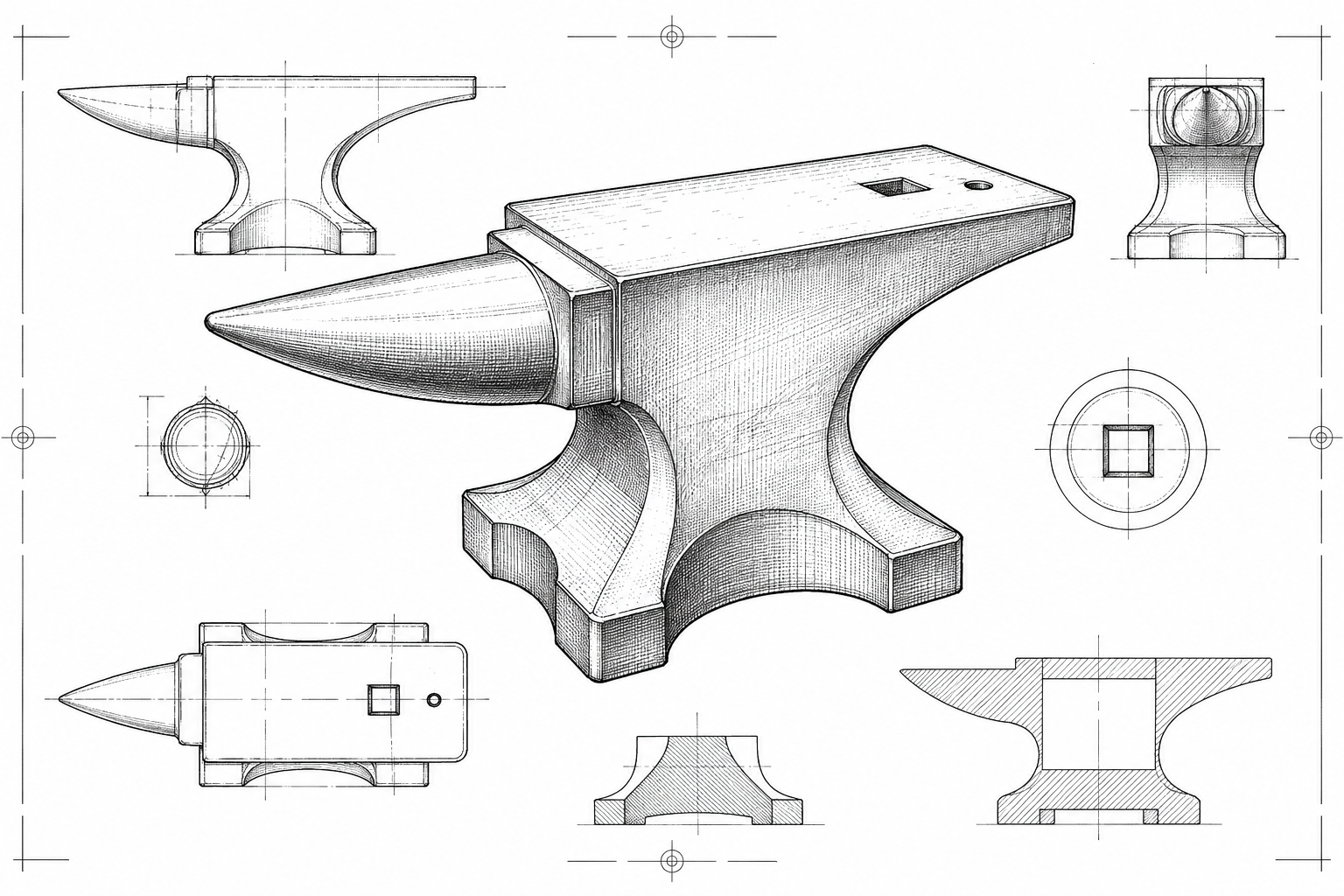
Most students arrive after years of being measured. They have learned to sit, absorb, and produce the minimally acceptable response. That is a habit, not a character flaw. The Forge interrupts it by making preparation public and participation visible. The room depends on every role.
Mentors who never step back produce dependent students. Mentors who vanish produce abandoned students. The fade is responsive: mentors scale UP when students are stretched and scale DOWN when students are solid. By Unit 8, students run the room because the fade has prepared them to.
Each book demonstrates a trait under pressure. The characters pay a real price for what they believe. That price is worth arguing about. A student who argues whether Grace's discipline was real has learned more about discipline than one who writes a five-paragraph essay about it.
The room is built so no student can quietly disappear. Every student has a job in every unit and every debate. That is not distrust. It is activation.
The order matters as much as the parts. A student who writes before they've argued ends up defending whichever idea came first. A student who argues before they've investigated is performing conviction, not earning it. The Forge runs on Investigate-Debate-Write-Story, in that order, on purpose:
What The Forge holds to throughout: classics over textbooks, mentor-guided, student-owned.
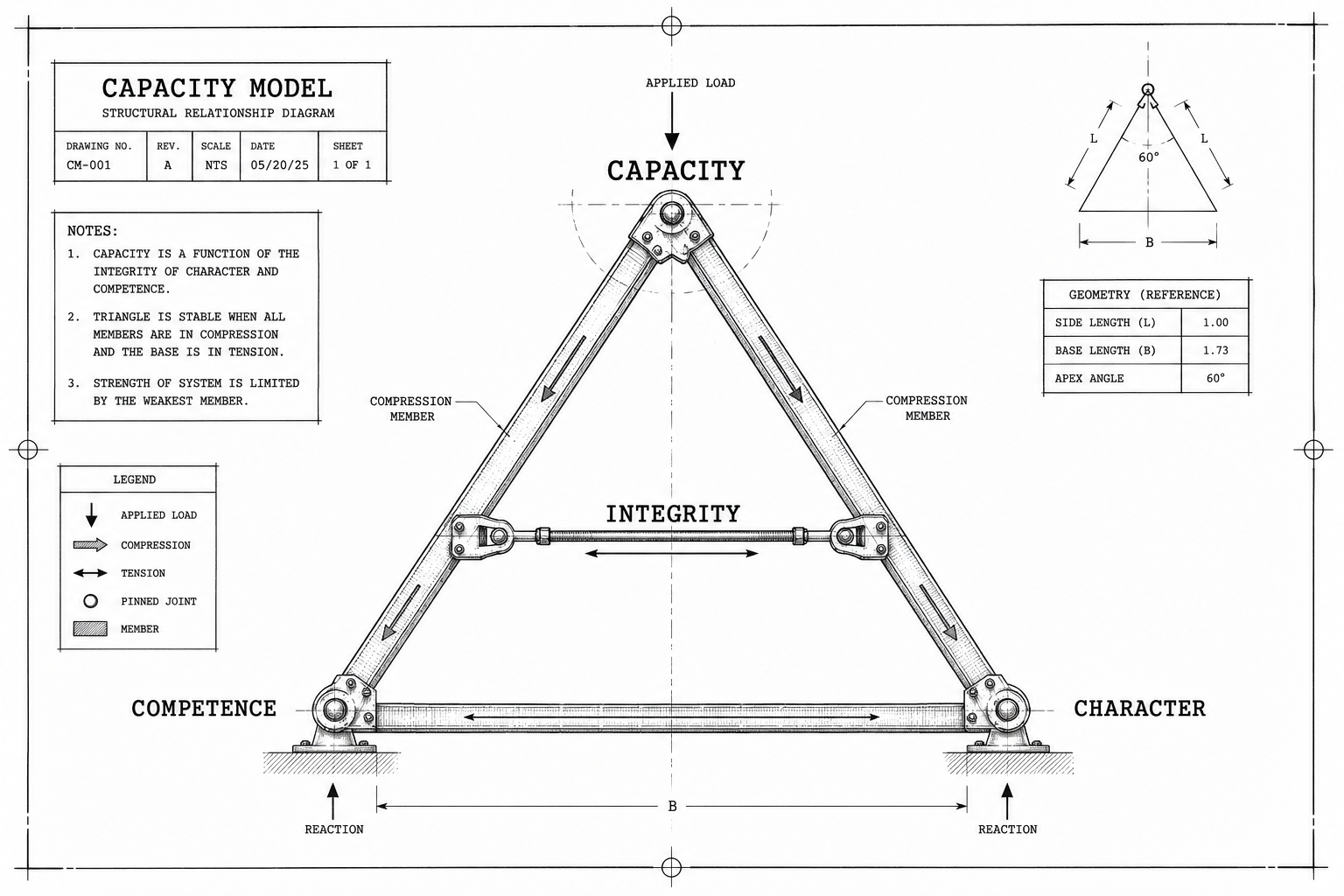
Character and competence are the load-bearing members: the moral foundation and the skill to act on it. Integrity is the tie holding them in line. Without it, the two legs push apart under weight instead of carrying it together. Weaken any one member, and the whole structure fails at that point, not at the others.